
A plantar fascia tear is a more severe and less commonly understood cause of heel pain. While plantar fasciitis develops gradually due to inflammation, a plantar fascia tear, also known as a ruptured plantar fascia, often results from a sudden injury or overstretching. Recognizing the difference is critical, as symptoms can overlap, and misdiagnosis may delay proper treatment.
At Rocky Mountain, we help patients understand can you tear your plantar fascia, how to identify warning signs, and the most effective approaches to care. Early evaluation is essential to prevent long-term complications and restore optimal foot function.
Understanding a Plantar Fascia Tear
The plantar fascia is a thick band of connective tissue extending from the heel bone to the toes, supporting the arch and absorbing shock during weight-bearing activity. A tear can be partial or complete, and typically occurs from:
- Sudden high-impact activity such as running, jumping, or landing awkwardly
- Forceful overstretching of the fascia during intense exercise
- Chronic strain from untreated or severe plantar fasciitis
- Previous corticosteroid injections weakening the fascia
Additional risk factors include flat feet, high arches, tight calf muscles, obesity, and age-related tissue degeneration. Unlike gradual plantar fasciitis, a tear presents abruptly and can make walking or standing very painful.
Key Symptoms of a Plantar Fascia Tear
Patients with a plantar fascia rupture often report:
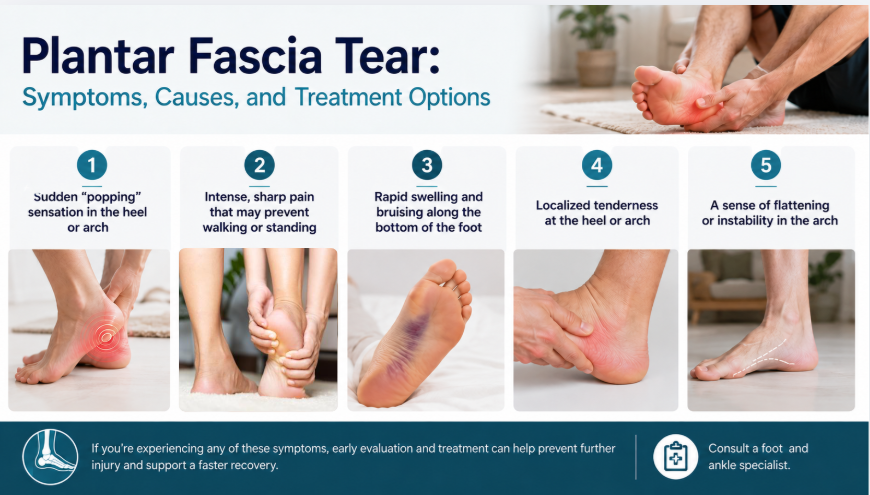
- Sudden “popping” sensation in the heel or arch
- Intense, sharp pain that may prevent walking or standing
- Rapid swelling and bruising along the bottom of the foot
- Localized tenderness at the heel or arch
- A sense of flattening or instability in the arch
These symptoms may overlap with plantar fasciitis rupture symptoms, which is why professional evaluation is critical. Without accurate diagnosis, patients may mistake a tear for a flare-up of plantar fasciitis and delay appropriate treatment.
Risk Factors and Preventive Considerations
Certain individuals are at higher risk of a plantar fascia tear:
- High-impact athletes: Sudden increases in running mileage or jumping exercises
- Excess weight: Adds stress to the plantar fascia during weight-bearing activity
- Biomechanical irregularities: Flat feet, high arches, or leg length differences
- Previous injuries: Chronic plantar fasciitis or prior microtears
- Muscle tightness: Limited calf flexibility increases tension on the fascia
While not all tears are preventable, awareness and proper preparation such as stretching, supportive footwear, and gradual activity progression can reduce risk. Maintaining overall foot and calf strength over time is essential for minimizing recurrence.
Diagnosing a Plantar Fascia Tear
Diagnosis involves a careful clinical assessment:
- Reviewing injury history and onset of pain
- Physical examination for swelling, bruising, and arch stability
- Imaging to confirm the extent of the tear.
- X-rays to rule out fractures
- Ultrasound or MRI to visualize partial or complete fascia tears
- Plantar fascia rupture test to assess tissue integrity
Early and accurate diagnosis ensures appropriate treatment, reduces the risk of long-term complications, and helps patients avoid misdiagnosis as severe plantar fasciitis.
Treatment Options
Treatment depends on severity and patient-specific factors.
Conservative Management
Non-surgical care can be highly effective, especially for partial tears:
- Rest, ice, and elevation to reduce inflammation
- Immobilization with a walking boot or brace
- Gradual rehabilitation including stretching and strengthening exercises
- Supportive devices or custom orthotics (Non-Surgical Treatments)
For patients with less severe heel pain, ultrasound therapy may also be considered as part of a comprehensive conservative treatment plan. You can read more in our previous blog, Ultrasound for Plantar Fasciitis: Treatment for Heel Pain, which explores how ultrasound can help reduce pain and support recovery.which explores how ultrasound can help reduce pain and support recovery.
Surgical Intervention
Surgery may be necessary for complete tears or injuries unresponsive to conservative care:
- Internal repair to restore fascia integrity
- Removal of damaged tissue if necessary
- Postoperative rehabilitation to regain full mobility. More details about surgical options are available on our Foot & Ankle Surgery page.
For patients with severe or complete plantar fascia tears that require surgery, understanding the different types of foot procedures can be helpful. You can learn more in our previous blog, 5 Common Foot Surgery Types, which explains the most frequent surgical options for foot injuries and what to expect during recovery.
Rehabilitation and Recovery
Recovery varies depending on the tear’s severity. Mild tears often heal within six to twelve weeks, whereas complete ruptures may require several months. Rehabilitation should focus on:
- Stretching: Targeting the plantar fascia and calf muscles to restore flexibility
- Strengthening: Intrinsic foot muscles, ankle stabilizers, and lower leg muscles
- Progressive weight-bearing: Gradual reintroduction to walking, jogging, and high-impact activity
- Balance and gait training: Prevents compensatory movements that may cause secondary injuries
Recovery also benefits from consistent monitoring of symptoms. Any increase in pain, swelling, or difficulty walking should be reported promptly to a specialist to prevent setbacks. Integrating gentle massage or physical therapy techniques under supervision can further promote tissue healing and circulation.
Long-Term Outcomes and Prevention
After healing, long-term strategies reduce the risk of recurrence:
- Maintaining foot and calf strength and flexibility
- Wearing supportive footwear with proper arch support
- Using custom orthotics to redistribute pressure evenly across the foot
- Gradual increases in activity intensity
- Early evaluation of minor heel discomfort to prevent microtears
These proactive measures support proper foot mechanics, protect the fascia from future injury, and enhance overall mobility and comfort.
When to Seek Professional Evaluation
Seek immediate evaluation if you experience:
- Sudden, severe heel or arch pain with a popping sensation
- Significant swelling, bruising, or tenderness
- Difficulty bearing weight or walking normally
- Persistent pain after previous plantar fasciitis
At Rocky Mountain, we provide thorough assessments for plantar fascia tear and related conditions, ensuring early intervention and safe recovery. You can schedule an appointment through our contact page to receive personalized guidance.

Comments are closed.