A blister on the pinky toe is one of those problems that seems minor at first until it makes every step uncomfortable. Whether it developed after a long walk, a new pair of shoes, or a particularly active day, small toe blisters are more common than most people expect.
Knowing what causes them, how to care for them safely, and when to seek professional attention can make a real difference in how quickly and comfortably they heal.
Why the Pinky Toe Is So Vulnerable
The pinky toe sits at the outermost edge of the foot, where it absorbs a disproportionate amount of friction and pressure, especially inside footwear. Because it is smaller and more exposed than the other toes, it has very little tolerance for shoes that fit poorly or for sudden increases in activity.
A pinky toe blister forms when repeated friction separates the upper layers of skin, allowing fluid to accumulate underneath. This is the body’s natural response to protect deeper tissue. Helpful in the short term, but quickly painful if the source of friction continues.
What Causes a Blister on the Pinky Toe
Several factors can contribute to blister development on or around the small toe.
Footwear fit and design are the most frequent causes. Shoes that are too narrow, too tight, or made with rigid materials press against the pinky toe with every step. A blister on the pinky toe from shoes is especially common when breaking in new footwear or wearing styles without enough room in the toe box.
Increased activity is another common trigger. Longer walks, hikes, or extended time on your feet can create enough friction to gradually break down skin, even in otherwise well-fitting shoes.
Moisture plays a role as well. Sweat softens the skin, making it more vulnerable to friction. Non-breathable footwear or damp socks can accelerate blister formation significantly.
Structural foot concerns such as bunions, hammertoes, or toe misalignment, can shift how pressure is distributed across the foot, leaving the pinky toe more exposed to recurring irritation.
If you experience small toe blisters alongside toe crowding or deformity, our Bunions & Toe Conditions services can help identify whether a structural issue may be contributing.
Recognizing the Symptoms
Most blisters are straightforward to identify: a raised, fluid-filled area on or around the small toe, accompanied by redness, tenderness, and sensitivity to pressure. The surrounding skin may feel warm or appear mildly irritated.
In some cases, a blister may contain blood rather than clear fluid, which can occur when deeper skin layers are involved. This is not always a cause for concern, but it does warrant closer monitoring and protection.
How to Treat a Blister on the Pinky Toe at Home
For most healthy adults, home care is a reasonable first step. According to the American Academy of Dermatology, intact blisters should generally be left unpopped, as the overlying skin acts as a natural barrier against bacteria while healing takes place underneath.
Protect it from further friction. Apply a cushioned blister pad, moleskin, or gel bandage over the area. This reduces pressure and gives the skin space to recover without additional irritation.
Switch to better-fitting footwear. Choose shoes with a wider toe box and softer materials until the blister resolves. Continuing to wear the shoes that caused the problem will delay healing.
Keep the area clean and dry. Gently clean around the blister with mild soap and water and change bandages regularly to prevent moisture buildup.
If the blister breaks on its own, clean the area carefully, apply a thin layer of antibiotic ointment, and cover it with a sterile bandage to reduce infection risk.
When to See a Specialist
Most pinky toe blisters heal within one to two weeks with proper care. However, some situations call for professional evaluation rather than continued home management.
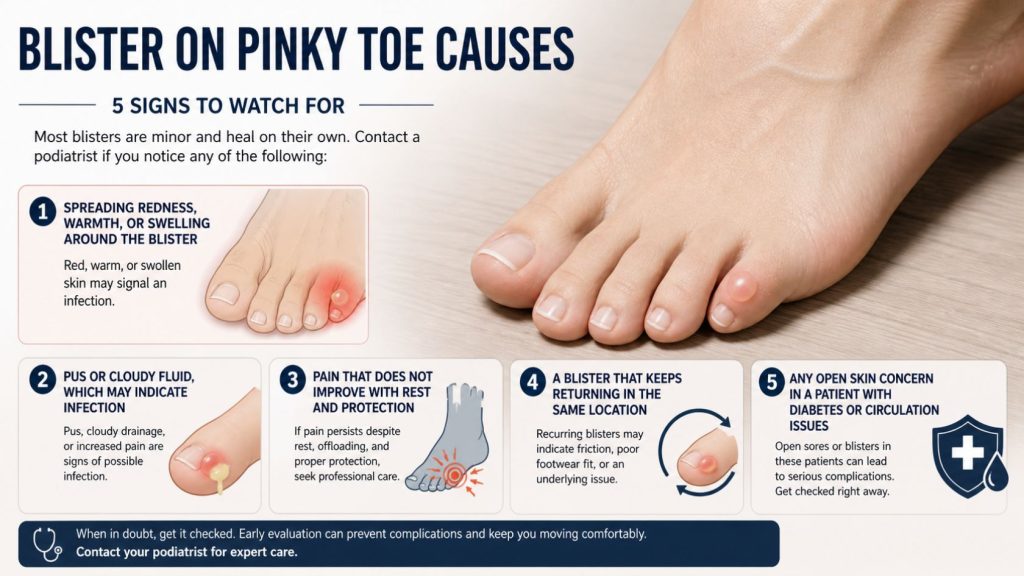
Seek care if you notice any of the following:
- Spreading redness, warmth, or swelling around the blister
- Pus or cloudy fluid, which may indicate infection
- Pain that does not improve with rest and protection
- A blister that keeps returning in the same location
- Any open skin concern in a patient with diabetes or circulation issues
For patients with diabetes, professional evaluation is especially important. Even a small blister on the small toe can become a more serious concern when circulation or sensation is affected. We cover this in depth in our blog on Diabetic Wound Care: How to Treat and Heal Foot Ulcers Safely, which outlines how seemingly minor foot injuries can escalate without timely care.
Recurring blisters in the same spot may also point to an underlying structural issue such as toe misalignment or uneven pressure that is worth addressing directly rather than managing repeatedly at home.
How to Prevent Pinky Toe Blisters
A few consistent habits can significantly reduce the likelihood of blisters coming back.
Choose footwear that fits properly. Shoes should offer enough room in the toe box so the pinky toe does not press against the inner wall. The American Podiatric Medical Association recommends shopping for shoes later in the day, when feet are naturally at their largest due to normal swelling.
Use moisture-wicking socks. Keeping feet dry reduces skin softening and friction. Look for breathable, moisture-wicking materials and avoid prolonged use of the same pair during high-activity days.
Apply protective padding before irritation starts. If a certain shoe tends to rub the pinky toe, placing a blister pad or gel cushion in that spot before activity can prevent a problem from developing in the first place.
Consider custom orthotics if blisters keep recurring. When pressure distribution or foot alignment is a contributing factor, custom orthotics may help reduce friction in vulnerable areas by improving how weight is spread across the foot.
Taking the Next Step
A blister on the pinky toe is usually manageable with the right approach, proper protection, reduced friction, and time. For most patients, that is all it takes.
But when blisters keep coming back, show signs of infection, or occur alongside other foot concerns, they deserve a closer look. At Rocky Mountain Foot & Ankle, we help patients identify what is driving recurring skin irritation and address any underlying issues that may be making things worse. Schedule an appointment at our Murray, Utah location and let us help you find a path to lasting comfort.

Comments are closed.