Foot pain does not always begin with a dramatic injury. Often, it develops gradually, subtle fatigue after long days, mild heel discomfort in the morning, or aching arches that seem to worsen over time. Recognizing the signs you need arch support early can prevent small alignment issues from turning into persistent pain.
This article explains what arch support is, why it plays a critical role in foot mechanics, how to identify symptoms linked to inadequate support, and when custom orthotics may be recommended to restore balance and comfort.
What Is Arch Support?
To understand if you need arch support, it’s important to first clarify what arch support is. The arch of the foot is a structural feature that helps distribute body weight evenly and absorb shock with each step. It works in coordination with muscles, ligaments, and tendons to maintain stability and efficiency during movement.
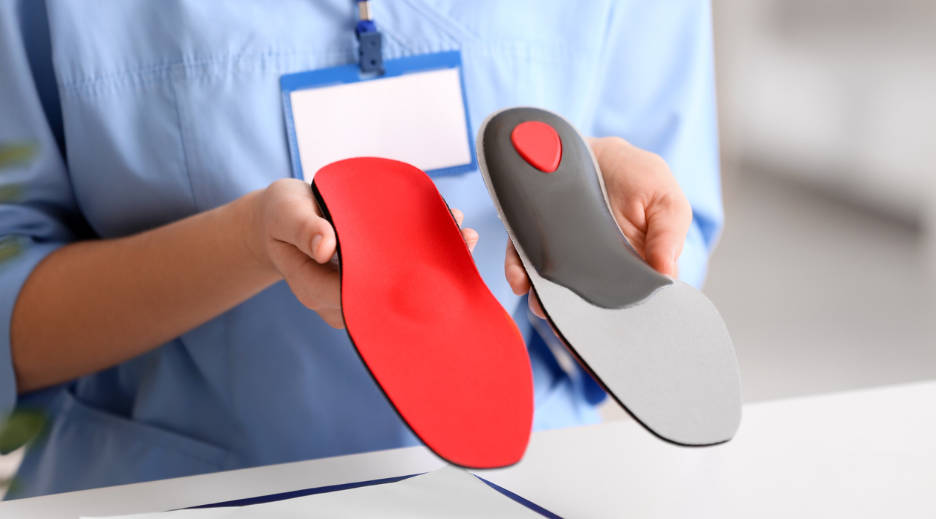
Arch support refers to footwear features or orthotic devices designed to reinforce the natural contour of the arch. Proper support helps prevent excessive inward rolling (overpronation) or instability that can strain surrounding structures.
When the arch is not adequately supported, pressure shifts in ways that can stress the heel, midfoot, ankles, knees, and even the lower back.
What Does Arch Support Do for Alignment and Comfort?
Many patients wonder whether support is just about cushioning. In reality, it plays a much larger role in how your feet function with every step.
Effective arch support:
- Improves foot alignment during walking and standing
- Reduces strain on the plantar fascia and Achilles tendon
- Enhances shock absorption
- Minimizes uneven pressure distribution
- Promotes more efficient movement patterns
Without proper support, the foot may compensate by altering gait mechanics. Over time, these subtle changes can contribute to inflammation and overuse injuries.
Early Signs You Need Arch Support
Your body often gives subtle clues when additional support is needed. Recognizing these early changes allows for timely intervention:
Persistent Heel or Midfoot Pain
Ongoing discomfort in the heel or arch, particularly first thing in the morning or after prolonged standing, may indicate that the arch is not functioning optimally.
Foot Fatigue After Routine Activity
If your feet feel unusually tired after a typical day, it may suggest that the arch is absorbing more strain than it should.
Gradual Changes in Foot Shape
Arches that appear flatter when standing or feel less stable during movement may benefit from structural support.
Uneven Wear on Shoes
Shoes that consistently wear down along the inner edge can reflect alignment changes related to arch instability.
These symptoms do not necessarily require immediate intervention, but they warrant evaluation, especially if they persist.
How Do You Know If You Need Arch Support?
The key difference often comes down to consistency and progression of symptoms rather than one-time discomfort. If discomfort:
- Occurs regularly rather than occasionally
- Returns despite replacing shoes
- Spreads to the ankles or knees
- Worsens with increased activity
then biomechanical support may be necessary.
Activity level is another important factor. Individuals who run, stand for extended periods, or participate in repetitive-impact sports place greater stress on their arches and may be more likely to need additional support.
Do I Need Arch Support for Flat Feet or High Arches?
If you need arch support depends largely on foot structure. Both flat feet and high arches can contribute to imbalance, but in different ways.
- Flat feet often require support to reduce overpronation and stabilize the foot.
- High arches may benefit from structured cushioning that improves shock absorption.
Because foot mechanics vary, support should be individualized rather than generalized. What works for one person may not address another’s specific alignment needs.
Who Needs Arch Support Most Often?
While anyone can benefit from well-designed footwear, certain individuals are more likely to require targeted support.
Those who commonly need arch support include:
- Patients with plantar fasciitis
- Individuals with tendonitis or recurrent ankle instability
- People with arthritis affecting the foot or ankle
- Athletes exposed to repetitive stress
- Individuals with chronic foot fatigue
When Are Custom Orthotics Recommended?
Not all discomfort requires custom devices. However, when symptoms persist despite supportive footwear, custom orthotics may be recommended.
Patients frequently search for the best orthotics for arch support, but the most effective option depends on individual biomechanics. Over-the-counter inserts offer generalized cushioning, whereas custom orthotics are designed based on your specific foot structure and gait.
Rocky Mountain Foot & Ankle provides specialized custom orthotics designed to improve alignment, reduce strain, and support long-term function when standard inserts are insufficient.
Custom devices are typically considered when:
- Pain is chronic or recurring
- Structural abnormalities affect alignment
- Conservative footwear adjustments have not resolved symptoms
- There is a history of stress-related foot injuries
The goal is not simply short-term relief, but improved mechanical support that helps prevent future problems.
Why Addressing Arch Support Early Matters
Ignoring early signs that you need arch support can allow biomechanical strain to progress. Poor alignment may contribute to plantar fasciitis, Achilles tendon strain, shin splints, and joint discomfort higher up the kinetic chain.
Addressing arch stability early often reduces the need for more invasive treatment later. Evaluation helps determine whether supportive footwear, targeted strengthening, or custom orthotics are appropriate for your specific needs.
Schedule an Evaluation at Rocky Mountain Foot & Ankle in Murray
If you’re experiencing persistent arch discomfort, heel pain, or foot fatigue and are unsure whether additional support is needed, a professional assessment can provide clarity. Rocky Mountain Foot & Ankle offers comprehensive foot evaluations and custom orthotic solutions at their Murray location, with care tailored to your structure, activity level, and long-term goals.
You can schedule an appointment through our contact page to discuss your symptoms and receive guidance on whether arch support or custom orthotics may help restore comfort and improve alignment.