
An ingrown toenail often begins as a minor irritation, but when infection develops, symptoms can escalate quickly and become increasingly painful. Many patients are unsure how to tell if an ingrown toenail is infected versus simply inflamed, which can lead to delayed treatment and unnecessary discomfort.
This article explains how ingrown toenail infections develop, the key warning signs to watch for, why pain may intensify over time, and when professional podiatric care is necessary. Understanding these distinctions can help you act early and protect your long-term health.
How an Ingrown Toenail Turns into an Infection
An ingrown toenail occurs when the edge of the nail grows into the surrounding skin instead of over it, most commonly affecting the big toe. In the early stages, this causes pressure and irritation. As the nail continues to press into the skin, small breaks can form along the nail fold, creating an entry point for bacteria.
Once bacteria enter, the body responds with inflammation. This is when a toe ingrown nail infection begins to develop. At this stage, the issue is no longer just nail-related, it becomes an active infection that typically worsens without proper care.
How to Tell If an Ingrown Toenail Is Infected?
Patients frequently ask this, especially when symptoms change or worsen. Infection usually causes clear and noticeable differences compared to simple irritation.
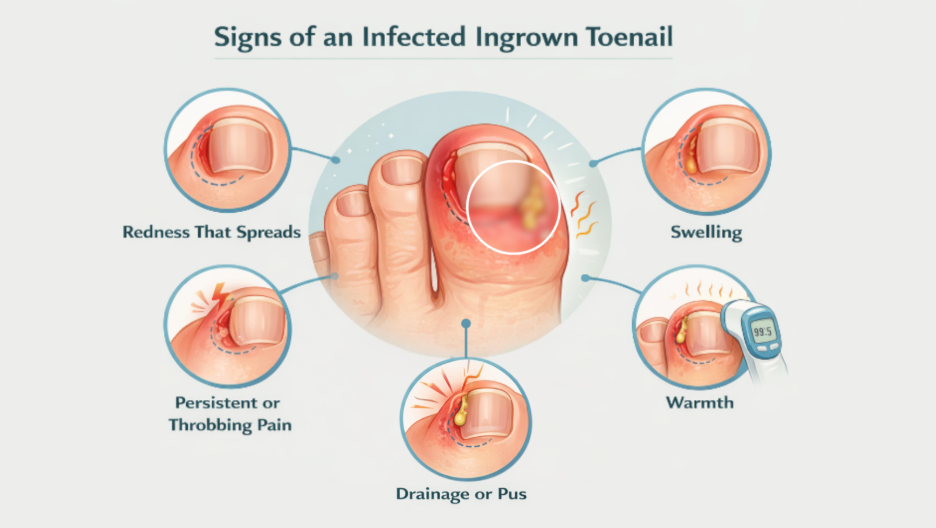
Common signs include:
- Redness that spreads beyond the immediate nail edge }
- Swelling that feels tight, firm, or increasingly tender
- Persistent or throbbing pain that worsens with pressure
- Drainage or pus, often yellow or green in color
- Warmth around the affected area
These symptoms strongly indicate an infected toenail, rather than a mild ingrown nail that may still respond to basic care.
Why Do My Toenails Hurt More Over Time?
A common concern patient’s voice is, why do my toenails hurt more than before? As infection progresses, swelling increases pressure in the confined space around the nail. This leads to heightened sensitivity and pain, even from light contact such as socks, shoes, or bedding.
This worsening pain pattern is often one of the most reliable indicators of how to know if your toenail is infected, especially when discomfort does not improve with rest or home remedies.
Risk Factors That Increase Infection
Several factors make ingrown toenails more likely to become infected, including:
- Improper nail trimming, such as cutting nails too short or rounding the edges
- Tight or narrow footwear that places constant pressure on the toes
- Repetitive toe trauma or sports-related stress
- Excess moisture around the feet
- Medical conditions such as diabetes or poor circulation
When these factors are present, even a minor ingrown nail can progress into an infected toe nail more quickly.
When Home Care Is No Longer Enough
Many patients attempt self-care when symptoms first appear, including soaking the foot or applying topical treatments. While these steps may help in very mild cases, they are often insufficient once infection has developed.
If symptoms persist or worsen, searching for a cure infected ingrown toenail at home can delay effective treatment. Ongoing redness, swelling, drainage, or increasing pain are signs that professional care is needed.
For early-stage irritation without infection, Rocky Mountain Foot & Ankle offers a range of non-surgical treatment options designed to relieve pressure, reduce inflammation, and support healing before more advanced care becomes necessary.
How to Get Rid of an Ingrown Toe Infection Safely
Understanding this depends on addressing both the nail and the infection itself. Treatment may involve relieving pressure from the ingrown nail edge, managing infection, and reducing inflammation, while protecting the surrounding skin.
Rocky Mountain Foot & Ankle provides specialized skin and nail services focused on treating infected ingrown toenails with techniques that promote proper healing and help reduce the risk of recurrence. Care is always tailored to the individual, taking into account nail structure, infection severity, and overall health.
Prompt treatment is especially important for individuals with diabetes, nerve conditions, or circulation issues, as infections can progress more quickly in these cases.
Why Early Treatment Makes a Difference
Leaving an ingrown toenail infection untreated can lead to worsening pain, delayed healing, and potential spread to surrounding tissue. In more severe cases, infection can become more difficult to manage and require more extensive treatment.
Recognizing an infected toenail allows patients to seek care earlier, often resulting in faster relief and simpler treatment.
When to See a Podiatrist
You should seek professional podiatric care if:
- Pain continues to worsen instead of improving
- Redness or swelling spreads beyond the nail area
- Drainage or pus is present
- Home care has not helped
- You have diabetes, poor circulation, or nerve concerns
Early evaluation helps prevent complications and supports long-term foot health.
Schedule Care at Rocky Mountain Foot & Ankle in Murray
If you are experiencing toenail pain, redness, or drainage and are unsure whether infection is present, a professional evaluation can provide clarity and relief. Rocky Mountain Foot & Ankle offers expert ingrown toenail care at their Murray location, with treatment plans focused on resolving infection and preventing recurrence.
You can schedule an appointment through our contact page to have your toenail evaluated and receive clear guidance on the safest next steps toward healing and comfort.