An ankle fracture can feel overwhelming at first, not just because of the injury itself, but because of the uncertainty that follows. One of the most common questions patients ask is, how long will this take to heal? Understanding broken ankle recovery time provides clarity and helps you plan for each stage of healing with realistic expectations.
Recovery is not a single event. It unfolds in phases, beginning with stabilization and continuing through rehabilitation. While timelines vary depending on fracture severity and treatment approach, knowing what typically happens at each stage can make the process feel far more manageable.
What Influences Broken Ankle Recovery Time?
No two fractures are identical. Broken ankle recovery time depends on several important factors:
- The type and location of the fracture
- Whether the bones are displaced or stable
- The treatment approach (non-surgical or surgical)
- Overall health, circulation, and bone quality
- Adherence to weight-bearing and rehabilitation guidelines
A small, stable fracture generally heals more quickly than a complex fracture involving multiple bones or joint misalignment. Age, smoking status, and certain medical conditions can also affect bone healing speed.
Because of these variables, recovery should always be individualized rather than based solely on averages.
How Long Does a Broken Ankle Take to Heal?
Most people are asking about bone healing timelines, in many uncomplicated cases, bone consolidation begins within 6 to 8 weeks. However, bone healing does not equal full functional recovery.
Muscle strength, joint flexibility, and balance often require additional time. For more complex fractures, especially those involving joint surfaces, recovery can extend beyond the initial healing window.
Understanding this distinction helps clarify overall ankle fracture recovery time and prevents frustration when mobility lags behind X-ray results.
Ankle Fracture Treatment and Its Impact on Healing
The type of ankle fracture treatment directly influences recovery progression.
Non-Surgical Management
Stable fractures may be treated with immobilization in a cast or walking boot. During this phase, protecting the bone from movement is essential. Swelling control and elevation support healing while the fracture stabilizes naturally.
Surgical Stabilization
If bones are displaced or the joint is unstable, surgery may be necessary to restore alignment and structural integrity. Rocky Mountain Foot & Ankle offers comprehensive foot and ankle surgery services when surgical correction is required to promote proper healing and long-term joint function.
Surgery does not automatically mean a longer recovery, but it does involve structured post-operative care to ensure the bones heal in the correct position.
Can You Walk on a Broken Ankle?
Whether weight can be placed on the ankle safely is determined by fracture type, alignment, and healing progress.
Immediately after injury, weight-bearing is often restricted. Placing weight on an unstable fracture can disrupt alignment and delay healing. In some stable fractures, partial weight-bearing may be introduced gradually under medical supervision once early healing is confirmed.
Clear, individualized guidance is critical. Premature walking can extend broken ankle recovery time, while appropriately timed weight-bearing supports safe rehabilitation.
The Stages of Broken Ankle Recovery Time
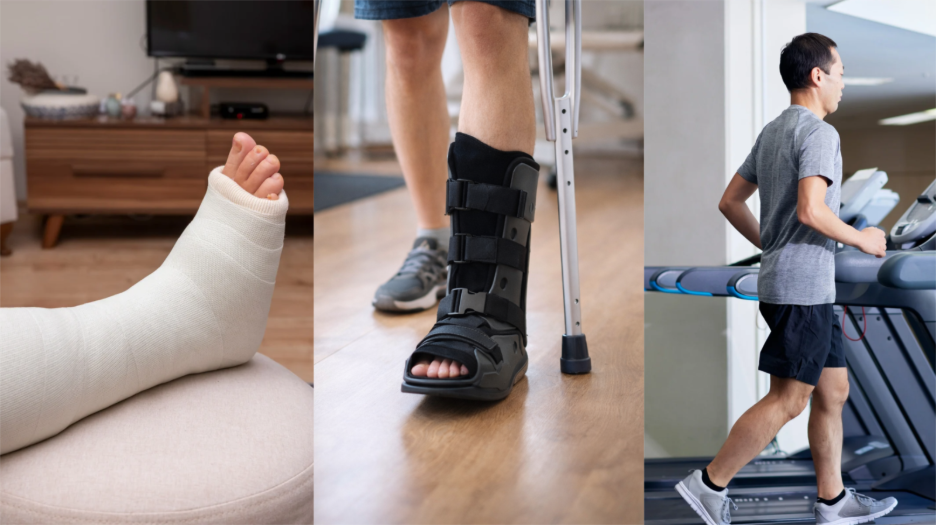
Healing typically progresses through three distinct phases. Each stage has a different focus and purpose.
Phase 1: Protection and Immobilization (Weeks 0–6)
The priority during this period is stabilizing the fracture. Swelling control, elevation, and limited motion protect the healing bone. Muscle stiffness and weakness are expected due to reduced movement.
Phase 2: Controlled Weight-Bearing (Weeks 6–10)
As imaging confirms bone healing, gradual weight-bearing may begin. This transition is carefully managed to avoid setbacks. Assistive devices may still be used to support stability.
Phase 3: Rehabilitation and Functional Recovery (Weeks 10 and Beyond)
The rehabilitation stage focuses on restoring:
- Range of motion
- Muscle strength
- Balance and coordination
- Normal walking mechanics
This is where ankle fracture rehabilitation time varies most between individuals. Recovery at this stage depends on pre-injury conditioning, fracture severity, and adherence to therapy.
What to Expect During Rehabilitation
Rehabilitation addresses the secondary effects of immobilization: weakness, stiffness, and reduced mobility. Even after bone healing, the ankle joint may feel tight or unstable.
Therapy may include:
- Targeted mobility exercises
- Progressive strengthening
- Balance retraining
- Gradual return to higher-impact activity
While some patients recover strength quickly, others require a longer ankle fracture rehabilitation time to regain full confidence and stability. Recovery tends to improve gradually rather than in a straight line.
Managing Swelling and Stiffness During Recovery
Persistent swelling is common, even months after injury. It often increases at the end of the day and gradually decreases as circulation improves. Elevation and gradual activity progression are helpful during this phase.
Joint stiffness is also expected following immobilization. Consistent movement and structured therapy improve flexibility over time.
Understanding that these symptoms are part of normal healing can reduce unnecessary concern while still encouraging appropriate follow-up care.
When to Follow Up During Recovery
While most fractures heal without complication, you should seek evaluation if you notice:
- Increasing pain instead of steady improvement
- Persistent instability
- Delayed mobility progress
- Signs of infection after surgery
Monitoring ensures that recovery remains aligned with expected timelines and helps address concerns early.
Setting Realistic Expectations for Healing
Understanding broken ankle recovery time means recognizing that recovery is both structural and functional. Bone healing marks an important milestone, but restoring strength and stability takes additional time.
Most patients resume normal daily activities within a few months, though return to sports or high-impact activity may take longer. Recovery timelines vary, but structured care and rehabilitation significantly improve long-term outcomes.
Schedule a Recovery Evaluation at Rocky Mountain Foot & Ankle in Murray
If you have recently experienced an ankle fracture or have concerns about your healing progress, professional evaluation can provide reassurance and guidance. Rocky Mountain Foot & Ankle offers comprehensive ankle fracture treatment and recovery management at their Murray location, with care tailored to your specific injury and goals.
You can schedule an appointment through our contact page to review your recovery progress and receive personalized recommendations for the next stage of healing.